In this article
Most beginners ask the wrong question: “How many shares should I buy?” The better question is: “How much am I willing to lose if this trade goes wrong?” Once that is decided, the quantity follows from simple arithmetic.
Step 1: Decide the money you can risk
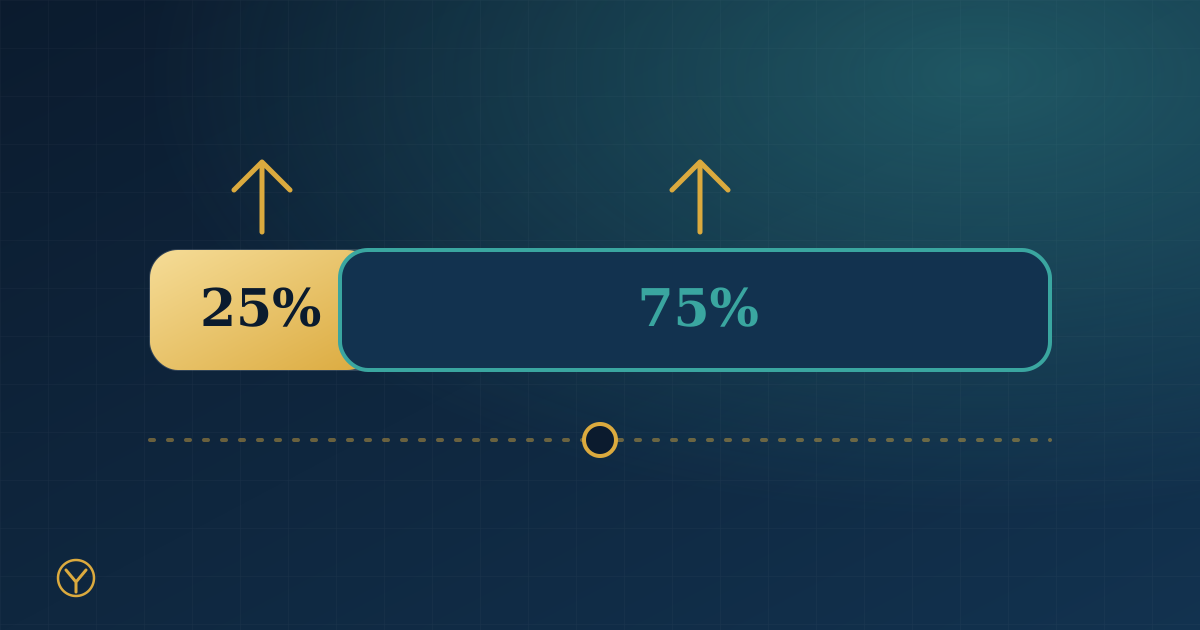
Choose a fixed percentage of your trading capital that you accept to lose on a single trade. Many traders keep it between 0.5% and 2%.
| Capital | Risk per trade | Money at risk |
|---|---|---|
| ₹1,00,000 | 1% | ₹1,000 |
| ₹5,00,000 | 1% | ₹5,000 |
| ₹5,00,000 | 0.5% | ₹2,500 |
The percentage is your rule. It does not change because a setup “looks perfect”.
Step 2: Find the distance to your stop-loss
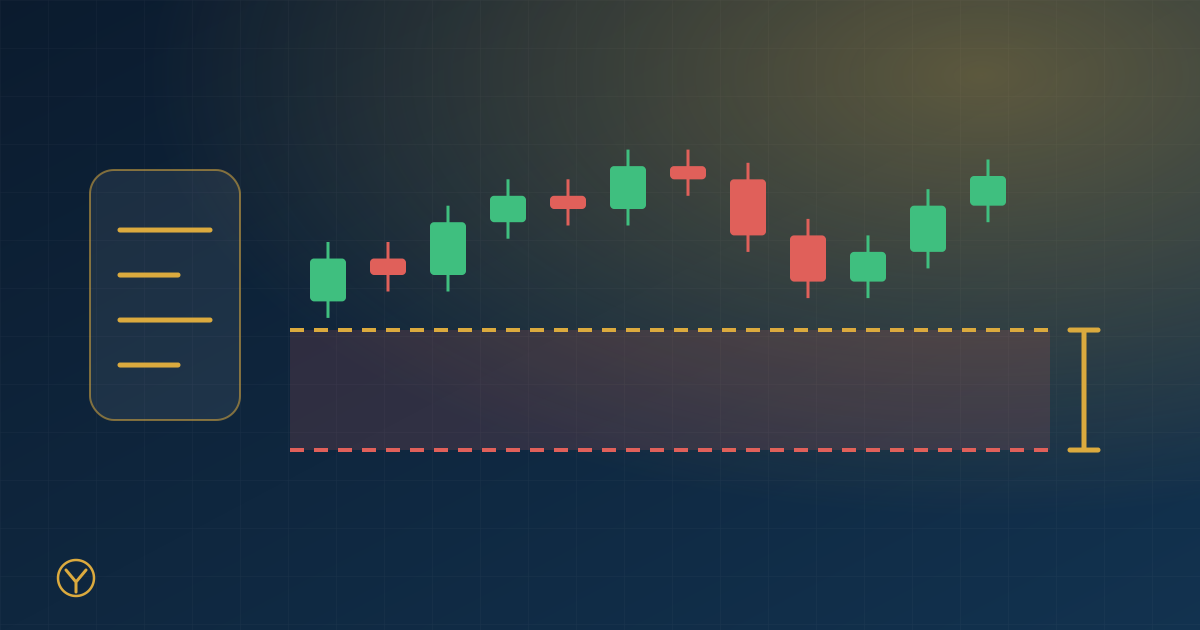
Your stop-loss is the price at which you admit the idea was wrong. The distance between your entry price and the stop-loss is your risk per share.
Step 3: Use the formula
Quantity = Money at risk ÷ Risk per share
A worked example
- Capital: ₹2,00,000 and risk: 1% = ₹2,000
- Entry: ₹500, stop-loss: ₹490, so the risk per share is ₹10
- Quantity = 2,000 ÷ 10 = 200 shares
If the stop-loss is hit, you lose about ₹2,000 plus small costs — exactly what you planned. If you had bought 500 shares “because the stock looked strong”, the same stop-loss would have cost you ₹5,000.
Does it work for short trades, futures and options?
Yes — the idea is the same. For a short trade the stop-loss sits above your entry; the distance is still your risk per share. For futures and options, use the risk per lot (price distance × lot size) and the answer is the number of lots:
Lots = Money at risk ÷ (Price distance × Lot size)
Example: money at risk ₹3,000; you plan to exit if the option premium falls ₹20 from your entry; the lot size is 50. Risk per lot = 20 × 50 = ₹1,000, so lots = 3,000 ÷ 1,000 = 3 lots. If the answer is not a whole number, round down — never up.
Common mistakes
- Moving the stop-loss further away after entering, so the loss becomes bigger than planned.
- Sizing up after a winning streak, or after a loss to “get it back”.
- Ignoring costs and slippage — brokerage, taxes and price gaps make the real loss a little bigger.
- Buying more than your funds allow — check that quantity × price fits your available money or margin.
Make it a habit
Write the numbers down before you enter: capital, risk %, entry, stop-loss and quantity. Afterwards, record what happened. A trading journal turns these numbers into feedback, so you can see whether you really follow your own rules.